Education
COTR partners in web-based science project
Imagine being able to conduct university science labs from your home computer
 |
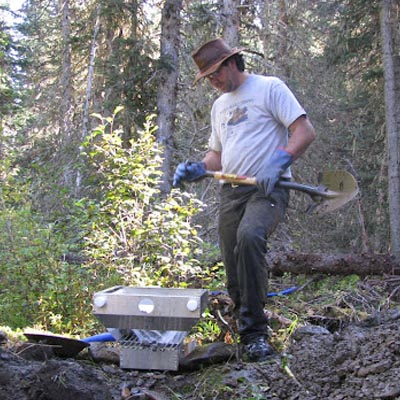
| ROCK ON: Geology students at College of the Rockies may be able to take part in online labs this fall. |
College of the Rockies, in collaboration with North Island College, Tatlayoko Think Tank Ltd., Tatla Lake School and Thompson Rivers University, is working to develop the first semester of what will eventually be an entirely web-based Associate of Science degree program, thanks to funding from Inukshuk Wireless and BCCampus.
COTR has extensive experience in the adaptation of programs for alternative deliveries. TTT has the multimedia experience that will be required for this project, while Tatla Lake School has the capacity to provide physical space and bandwidth. North Island College has placed hundreds of courses into a web-based format and TRU, which has a provincial mandate for open learning, will contribute their experience in curriculum evaluation.
The Remote Web-based Science Laboratory will allow students, from their home computer, to control actual lab equipment and collect real data for analysis. It is expected that a prototype will be ready for testing this summer.
In the upcoming academic year (2008-2009), students enrolled in a first semester Geology course at College of the Rockies will have the opportunity to try out this new approach for themselves by participating in a pilot of this new online course. Labs will be completed using a Geology science kit along with interactive web-based activities.
Students will also be able to participate in a pilot Physics course at COTR. Labs in the Physics course will use the sophisticated Remote Web-based Science Laboratory technology to manipulate lab equipment, gather experimental data, and share it with online classmates.
Two entirely web-based Space Science and Astronomy courses have already been developed by North Island College. Ron Evans, an instructor at NIC, is one of the driving forces behind this project.
"The greatest challenge in developing a web-based science program is the lab component," said Evans.
For courses to be transferable for university credit, students must be able to actually conduct labs in real time, collecting authentic data that can then be analyzed. A simulation is not adequate. To meet this need, NIC is presently working on the prototype for the Remote Web-based Science Laboratory, Evans said.
RSWL technology will significantly decrease some of the barriers to obtaining a science education. People who have not been able to access a formal science education because they live in remote communities or because of family or employment commitments, will now be able to do so.
This project has interesting implications for traditional education, according to Evans.
"Once we get this working, science labs will no longer be limited as to when and where they can be offered," he said. "RWSL technology will increase the ability of institutions to deliver science education to traditional students as it will afford greater flexibility in lab scheduling.
Inukshuk Wireless's Learning Plan has provided funding for this initial phase of RWSL development. Inukshuk encourages the development of multimedia-rich learning content that will allow learners across the country to embrace online learning.
BCCampus has a mandate from the provincial government to provide web-based post-secondary curriculum province wide.
For more information contact Gina Bennett at 489-2751 ext. 3287. |