


Environmentally sensitive yards is a trend that is becoming more common everywhere, and homeowners in the Kootenays are no exception.
What are some ways a homeowner can be environmentally sensitive?
1. Be selective in what you choose to plant
Choose hardy flowers and shrubs that are native to the environment and will thrive with little water and attention. Exotic plants often require more fertilizer and water and are not adapted to environment where you live. Your local garden centre will be able to give you suggestions as to what will grow best in your yard.
2. Have a smaller lawn area
Lawns use a lot more water and fertilizer than other plants. They also take more time to care for.
3. Timed irrigation systems
A timed water irrigation system not only saves water, but it can be a great convenience to the homeowner. If the homeowner goes away for the weekend to enjoy the lake during a heat wave, he can relax knowing that he won’t come home to a burnt lawn and wilted tomato plants. In many places the timed irrigation could also save him from being fined by the city if his sprinklers are going continuously. Water with soaker or drip hoses.
4. Use landscaping fabrics
Landscaping fabrics allow the plants to grow only where you want them to. Then you can water only where necessary.
5. Use mulch
Mulch helps keeps the soil moist and water available to the plants rather than evaporating into the air.
6. Use raised bed gardens
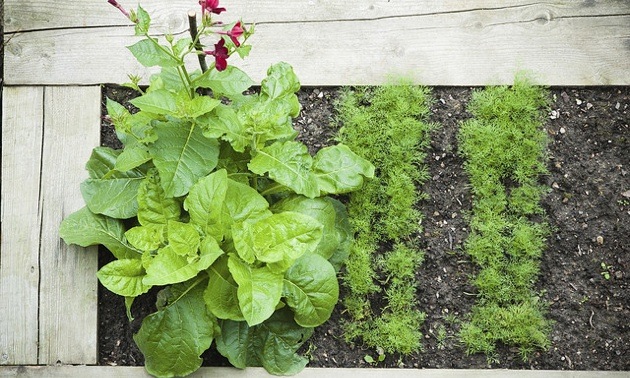
Raised beds maximize your growing space. You can have better control over the soil that goes into the raised beds, meaning it can be a much higher quality. Raised beds allow you to have exactly the soil type you need for what you are growing.
7. Compost
Composting re-uses what you throw away and improves your soil so your plants will flourish. Compost helps bind clusters of soil particles, called aggregates, which provide good soil structure. Such soil is full of tiny air channels and pores that hold air, moisture and nutrients. Compost increases the soil's ability to retain water and decreases runoff.
8. Collect rainwater
You can take advantage of the available water to give your plants what they need.