
It is the responsibility of the administration in Canadian communities to ensure that citizens can count on basic services: clean water, safe and efficient disposal of waste and maintenance of roads. Not an inspiration for poetry, perhaps, but let the system fail and there will certainly be some drama.
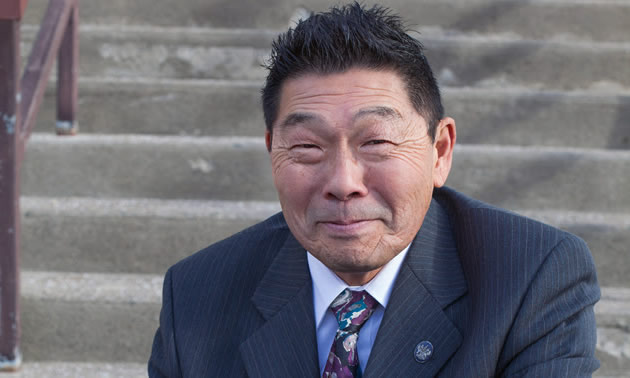
Ron Toyota, now in his third term as mayor of Creston, B.C., is dedicated to supporting the community where he was born and raised. “Infrastructure is a dry topic,” he said, “but it’s the reason we’re here—to maintain the structure.”
We asked Mayor Toyota about his work, his history and his plans for the future.
Though you’ve lived in Creston all your life, is there something about you that your community might be surprised to learn?
During the Second World War, my parents—who were of Japanese descent but born in Canada—were considered the enemy. They were both relocated from their homes to an internment camp in the Slocan Valley, and that’s where they met. They were there for three and one-half years. When the war ended, they got married and moved to Creston.
My father, Tak Toyota, became a successful businessman and a reeve for the Town of Creston. He died in 1973 at the age of 55, just a year after he went back to school to fulfill a lifelong dream to further his education. My mother will be 92 in February and still lives in her own home.
Is there a specific strength that you bring to local politics?
I think it’s my experience from living here for a long time. Leadership involves a lot of listening, compromise and negotiation, and I can be flexible. I’m serving the community in which I live—I don’t like the label of “politician.” We have a pretty broad vision and Council and staff work together to achieve what’s good for the entire community.
What are some of those good things?
We’re working with the provincial government regarding our roads. Our biggest priority is to complete the highway realignment so that we can reclaim five blocks of our main street for the use of the town, rather than the highway—we’re planning to make the downtown a vibrant and busy locale for business, markets and other events. We’re hoping to accomplish that within five years. Phase 1 was completed in 2015, and that was a major accomplishment.
Can you tell me what’s on your agenda for 2017?
We’ll continue our work on the highway realignment and put the final touches on our new Official Community Plan, which looks ahead at the next five to 10 years. One of the items in that plan is to take steps toward building a new fire hall, which is a major project for the next 30 years or so.
How would you characterize success?
Seeing positive results from our planning—having those plans come to fruition and provide benefits to the community. Our community complex is a good example of that. We had to borrow $18 million, and the end result is a wonderful feature in the community. Being part of the design team, seeing the borrowing referendum approved, getting the funds and getting the project physically done—to me that’s one of the biggest personal accomplishments I’ve seen in this valley in the last eight years.
What advice would you offer to someone entering municipal politics?
It’s great to come in with new ideas, but perhaps tap into the experience of the people who preceded you before making changes. Understand the reasoning and the vision behind the plan that’s already in place, and understand that your decisions will affect people for at least a couple of generations.