



For Kootenay industries, the need for skilled labour is always top of mind. According to the Kootenay Regional Workforce Table, there will be 4,700 new jobs in the Kootenays between 2012 and 2020, reflecting growth in sectors like coal mining, hydro-electric production, forestry and tourism. There will be another 18,100 job vacancies due to retirements. According to the British Columbia Trade Occupations Outlook, 15.6 per cent of all jobs in the Kootenays are in the trades.
If you do the math, this means a hefty demand for over 3,500 new tradespeople by 2020. So how are local industries coping?
Looking within and without
“In some cases we hire journeymen tradespeople,” said John Belland, human resources manager at Zellstoff Celgar. “And in other cases we run apprenticeship programs in the mill itself.”
Zellstoff Celgar, known simply as Celgar, to locals, is a pulp mill located near Castlegar. It needs skilled tradespeople for all steps of its operations. This includes the wood room, where logs are turned into wood chips, and the pulp mill, where the chips become sheets of fibre that get shipped to customers, who ultimately transform them into products like tissue and writing paper. It also has a “power and recovery” area with power-generating turbines, a recovery boiler and effluent treatment, plus an overall maintenance department.
Altogether, the organization employs roughly 400 people. About 100 of these are skilled tradespeople, representing a wide range of categories, including millwrights, pipefitters, electricians and even some carpenters.
Retirements drive a lot of Celgar’s demand for new employees. “We keep a very close eye on our planned attrition,” said Belland. “We know exactly how many people we need in each trade group, we keep a close eye on what we expect to be their anticipated retirement dates and we make plans accordingly. We’ll have apprenticeships where it makes sense. In other cases we’ll know that we’ll have to reach out to the market.”
Apprentices are hired internally. Usually, these people have already been working with Celgar for several years as general labourers or operators, and get selected for apprenticeships after a bidding process that considers both seniority and aptitude test results. If successful, they then start down a four-year program, apprenticing under the skilled workers at Celgar and schooling through places like BCIT, NAIT or SAIT (the BC, Northern Alberta and Southern Alberta institutes of technology).

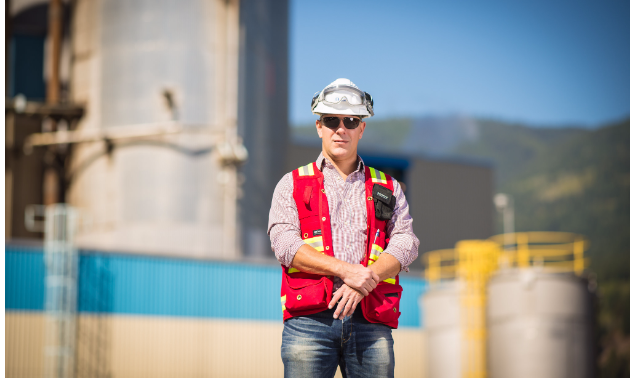
Zellstoff Celgar obtains its skilled tradespeople through hiring and apprenticeships. — Photo courtesy Zellstoff Celgar
If the position needs to be filled outside the organization, Celgar tries to hire locally but sometimes has to look farther afield. “It’s always tough to find the best people," said Belland. "Instrument mechanics in particular are hard to come by. Given the combination of our apprenticeship program as well as our continued outreach into the labour market, I think we have a good plan to keep the number of people that we need in that function.”
Starting them young
Kootenay residents can also get experience in skilled trades in other ways.
High school students, for example, can get technical training in the trades—while earning both high school and post-secondary credits—through the province’s ACE-IT program. Short for Accelerated Credit Enrolment in Industry Training, this program is delivered through institutions like Selkirk College and College of the Rockies, in partnership with local school districts.
Students can also take advantage of the province’s Secondary School Apprenticeship program, which works alongside ACE-IT to give them practical, hands-on training as apprentices. Plus there’s Columbia Basin Trust’s School Works program, which provides a wage subsidy to help businesses and other organizations hire first-level apprentices in select trades. Also, organizations like Celgar offer scholarships and bursaries that support people who are interested in and heading toward careers in the trades.
Together, these methods help ensure a steady supply of skilled workers—in turn enabling Kootenay industries to remain strong while fulfilling their often-expanding staffing needs.