

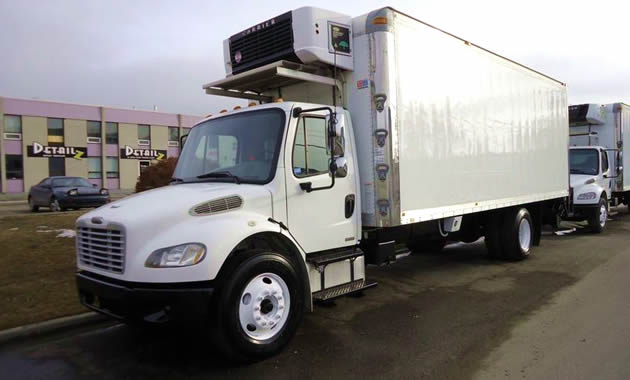
2 of 2Revolution Biodiesel is reducing the impact of refrigerated shipping with its biodiesel trucks. — Photo courtesy Paul Kelly
‹ › …Green Scene is excited to have learned about yet another innovative Kootenay business based on environmental conscientiousness. Revolution Biodiesel, based in Winlaw, provides post-consumer biodiesel as well fryer oil pick up and are now shipping produce to Alberta and the Kootenays without fossil fuels. Read on for more information on this new initiative.
With much discussion around kitchen tables and in the media about the carbon impacts of food miles, folks in the Kootenays and Alberta likely feel a little helpless. The bulk of our produce must come from the Okanagan or distant California farms.
Traditionally these “food miles” equate with massive volumes of diesel fuel, used to move fresh food from orchards to packing houses, distribution warehouses, then on to retailers and consumers. With perishable foods, additional diesel fuel is required for the truck’s refrigeration unit, making climate-controlled trucking one of the most costly ventures in the transportation sector. A typical freight truck will use over 500 litres of diesel fuel to bring a load from Cawston—Canada’s organic fruit capital—to Calgary. Often these trucks return to the Okanagan empty or with a partial load, making it a 1000 litre round trip. Sourcing produce from California extends this round trip and consumes an additional 1200-1400 litres of diesel fuel per truckload.
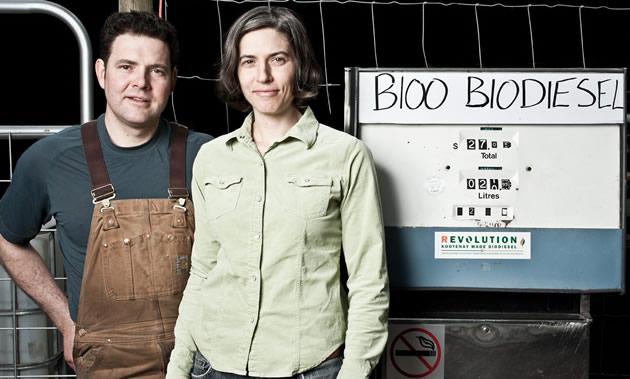
Kootenay foodies and entrepreneurs Paul and Clare Kelly of Winlaw, B.C., saw a potential business opportunity in developing a solution to the problem. Making use of their contacts from Calgary’s natural food sector and fuel from their on-farm biodiesel plant, they invested in a refrigerated truck that they could run on pure biodiesel. The 100 per cent post-consumer fryer oil derived biodiesel that they produce is calculated to have an 89 per cent lifecycle carbon emission reduction compared to conventional fossil-fuel diesel. Additionally, by shipping directly from farm to retail store without warehouse nodes, the Kelly's firm, Revolution Biodiesel, was able to increase the share of retail proceeds to the farmers, and dramatically reduce food miles. A backhaul of Alberta organic crops such as feed, hay and straw ensures that the truck is running full to capacity as much as possible.
While supply of waste-to-energy biofuels is currently limited to the 150,000 litres a year of oil feedstock they collect from local restaurants, the Kellys currently have enough biofuel to run up to three semi-loads per week to Calgary, moving over 120,000 pounds a week of fresh, organic B.C. fruit. They are hopeful that new technologies such as diesel-electric hybrids become commercially viable as they grow, so that they can improve fuel economy and further extend their company’s ability to offset the carbon footprint of your peaches and nectarines. Their freight service maintained weekly deliveries throughout the 2013 B.C. produce season with no breakdowns or damaged freight claims.
Read the Revolution Biodiesel About Us page or the company’s blog to learn more.
Return to Green Scene for more great posts on sustainability.