
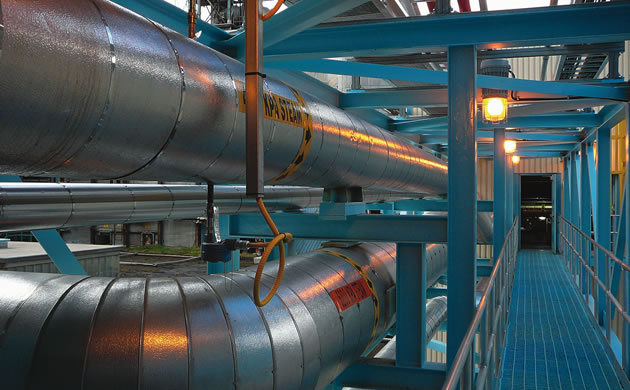
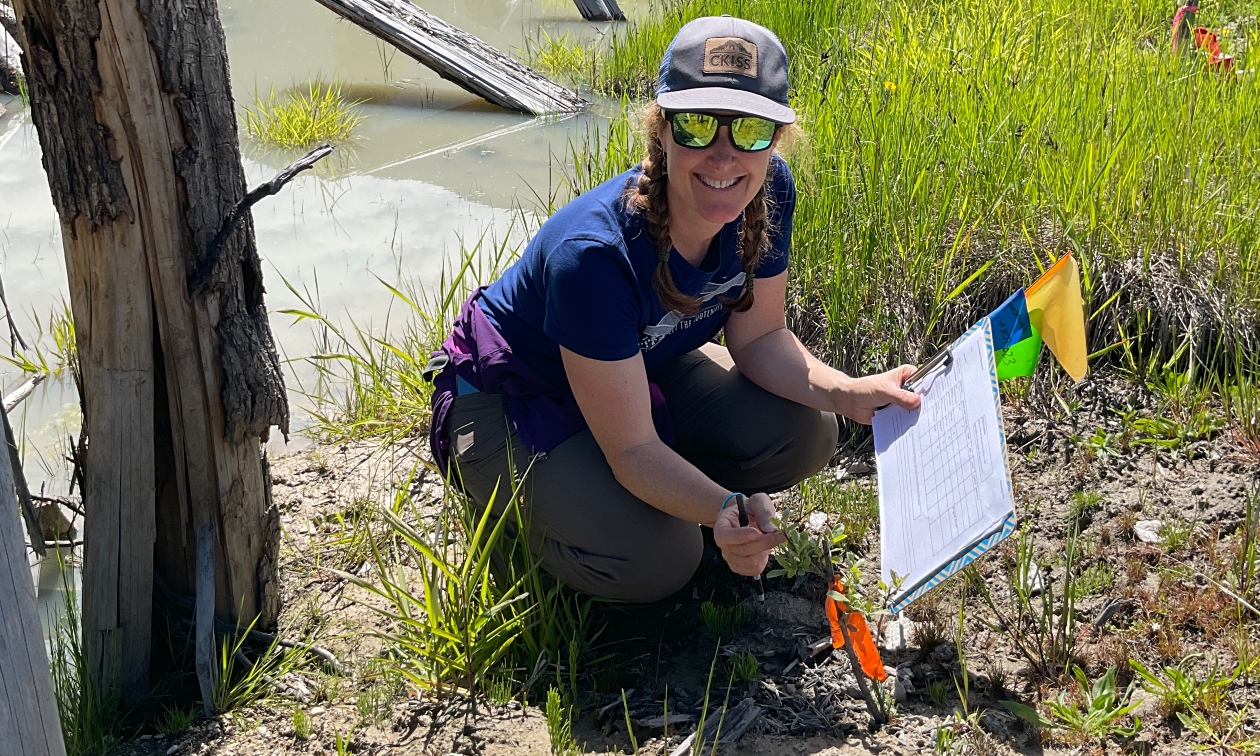



2 of 5Jim McLaren, the energy co-ordinator at the Zellstoff Celgar Pulp Mill in Castlegar, took Kootenay Business on a tour of the facility. — Keith Powell photo
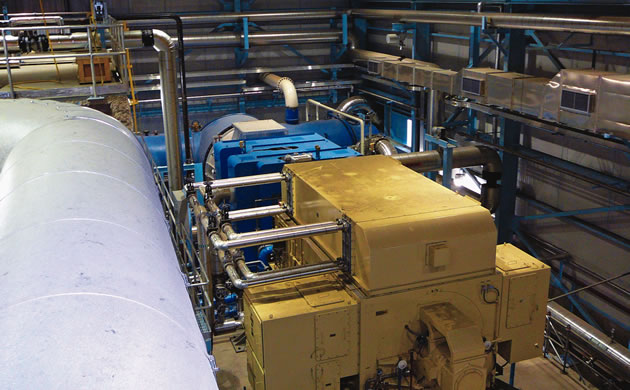
3 of 5The mill's new green energy operation houses a high-efficiency turbine and state-of-the-art generator. — Keith Powell photo
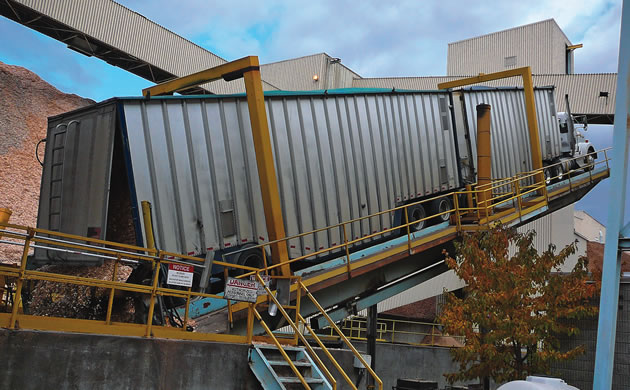
4 of 5A chip truck unloads its wood chips on a specially designed ramp. — Keith Powell photo
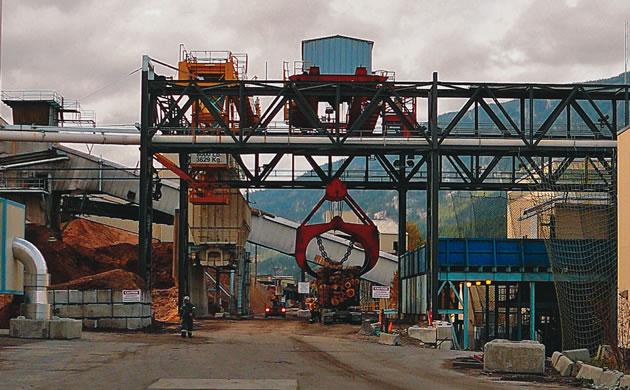
5 of 5This overhead crane grabs logs to be moved to the upgraded wood room. — Keith Powell photo
‹ › …Just north of Castlegar, British Columbia, lies the Zellstoff Celgar Pulp Mill; with its workforce of more than 400 employees, it is one of the key economic drivers of the West Kootenay.
The massive footprint of the pulp mill looms over the banks of the Columbia River, and the mill—originally built in 1960—has been a particularly busy beehive of construction activity in recent months.
Early in 2010, the federal government announced that the Zellstoff Celgar Pulp Mill would be the first mill in B.C. to receive funding—$40 million—under the Pulp and Paper Green Transformation Program (PPGTP) for its Green Energy Project.
“This project shows that smart investments enable pulp mills to increase their capacity to produce renewable energy from forest biomass,” said MP Colin Mayes at the announcement in February. “The PPGTP is laying the groundwork for a greener, more sustainable future for our pulp-and-paper sector and will help maintain jobs in the community.”
Spreading greenness
The project created 145 full-time jobs in the region and the result is that Celgar can now potentially produce 30 to 35 mega-watts of additional power annually that can be sold back into the BC Hydro grid. This is equivalent to the power needed to supply 20,000 homes annually.
“We have secured a 10-year contract with BC Hydro,” said Jim McLaren, the energy co-ordinator. “So we can now generate enough renewable electricity to meet our own needs to operate the pulp mill and supply the excess energy to the B.C. grid as well.”
The Celgar Green Energy Project had three main components that were designed to improve the environmental performance of the mill’s existing infrastructure. The investment of $40 million was combined with another $20 million from the company. With the completion of the project, the mill can now take advantage of waste heat, increase the production of steam from wood waste and increase capacity to generate bio energy. Other significant environmental benefits will include a reduction of greenhouse gas emissions, increased energy efficiency and reduced odour and noise in the community.
Getting a sense of the scale
McLaren recently took Kootenay Business on a tour of the mill. The key installation included a new high-efficiency turbine, a state-of-the-art generator and high-capacity condensor and boiler.
“With over 150 chip and waste wood trucks visiting the site every day, we have also recently upgraded our wood room,” said McLaren, pointing to a nearly vertical chip truck being unloaded. “Celgar now produces 30 per cent of our own wood chips right on the site.”
The wood room operation includes the unloading of both logging and chip trucks; there is a huge overhead crane to scoop logs from river booms, and giant piles of a variety of wood chips and waste wood products.
With the talk of renewable energy and bio energy, it might be easy to forget that Celgar’s primary product continues to be pulp. The mill generates, on average, 1,450 tons of wood pulp per day, with an annual production of some 500,000 tons a year.
“It is our goal to be producing 540,000 tons annually,” McLaren said, as we worked our way through the pulp production area.
“Keep on buying lots of Bounty toilet paper and paper towels,” joked McLaren. “That’s where most of the high-grade pulp we make goes, as we primarily supply the western North American market. Thirty per cent of our product is also sold into the Chinese market.”
So what do you get for a $60-million investment? A more energy-efficient operation, a lot of employment and a reduction in greenhouse gas emissions.